
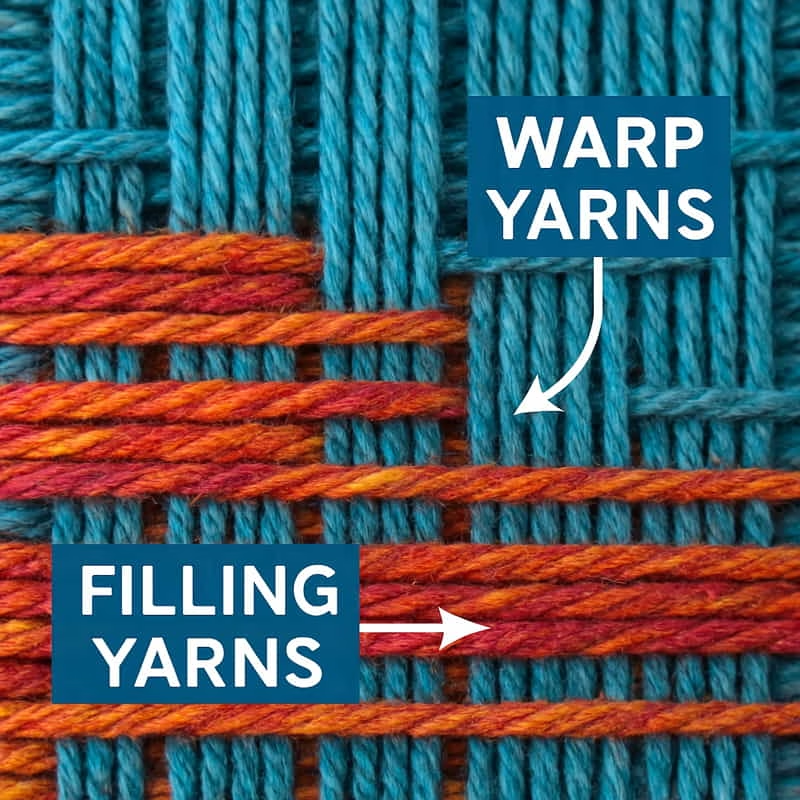
Warp and filling yarns are core to weaving, with warp providing strength and filling adding flexibility. This article covers their properties, applications, differences, and role in sustainable textiles, including materials, preparation, weaving techniques, innovations, trends, selection, care, economic impact, and environmental considerations. With a focus on eco-friendly fibres like organic cotton and recycled polyester, it highlights how these yarns support high-performance, sustainable fabrics for apparel, home textiles, and technical uses.
Warp and Filling Yarns: Essential Guide to Weaving Basics
Warp and filling yarns, also known as warp and weft yarns, are the fundamental building blocks of woven fabrics, defining their structure, durability, and aesthetic appeal. In the weaving process, warp yarns run lengthwise, providing the fabric’s backbone and stability, while filling yarns, or weft yarns, interlace crosswise, contributing to the fabric’s width and design versatility. This interplay creates a wide range of textiles, from sturdy denim to delicate silks, used in apparel, home furnishings, and technical applications. As the textile industry evolves, the focus on sustainable textiles has transformed warp and filling yarns, incorporating eco-friendly fibres like organic cotton, recycled polyester, and bamboo to reduce environmental impact while maintaining performance. Understanding these yarns is crucial for designers, manufacturers, and consumers aiming to balance quality, functionality, and sustainability in modern textiles.
Warp yarns are the vertical threads stretched taut on a loom, enduring significant tension during weaving. They must possess high strength, low elongation, and uniformity to withstand the loom’s mechanical stress without breaking. Typically, warp yarns are sized—a process where they are coated with protective agents like starch or polyvinyl alcohol to enhance abrasion resistance and reduce friction. This preparation is vital for high-speed weaving, where warp yarns face repeated abrasion from heddles, reeds, and shuttle movements. In contrast, filling yarns are inserted horizontally, requiring less tension but greater flexibility to weave through the warp sheds effectively. Filling yarns often prioritize softness, dyeability, and aesthetic qualities, as they contribute more visibly to the fabric’s surface texture and pattern.
The distinction between warp and filling yarns extends beyond their orientation; it influences fabric properties such as drape, weight, and durability. For instance, a fabric with strong warp yarns and softer filling yarns might exhibit excellent tensile strength along the length but more pliability across the width, ideal for applications like curtains or upholstery. Conversely, balanced yarns in both directions create stable, isotropic fabrics suitable for apparel. In sustainable textiles, the choice of warp and filling yarns is increasingly guided by environmental considerations, with organic cotton warp yarns providing strength and recycled polyester filling yarns adding resilience, reducing the overall carbon footprint of the fabric.
Properties of Warp Yarns
Warp yarns are engineered for endurance, with properties tailored to withstand the rigors of weaving. High tensile strength is paramount, typically ranging from 3–8 g/denier depending on the fibre type. For example, cotton warp yarns offer a tenacity of 3–5 g/denier, while polyester can reach 6–8 g/denier, making it a preferred choice for industrial textiles. Low elongation (5–10%) ensures minimal stretching under tension, preventing warp breaks that could halt production. Uniformity in diameter and twist is essential, as variations can lead to fabric defects like reed marks or uneven dyeing.
Abrasion resistance is another key property, enhanced by sizing agents that form a protective film around the yarn. In eco-friendly fibres, natural sizes like starch from sustainable sources are used, reducing chemical pollution. Moisture absorption varies: cotton warp yarns absorb 8–13% of their weight, aiding in humid climates, while synthetic warp yarns like nylon are hydrophobic, ideal for moisture-resistant applications. Thermal properties also play a role; wool warp yarns provide insulation with low conductivity (~0.026 W/m·K), suitable for winter fabrics. In sustainable textiles, warp yarns from recycled polyester exhibit similar properties to virgin fibres but with a 90% reduction in landfill waste, as noted in studies on green textile production.
Dyeability and color fastness are crucial for warp yarns, as they form the fabric’s base. Organic cotton warp yarns take dyes well with low-impact processes, ensuring vibrant, long-lasting colors without harmful chemicals. Elasticity, though limited, is vital for fabrics requiring some give, such as stretch denim, where warp yarns blended with elastane (2–5%) offer 10–20% stretch. Overall, warp yarns’ properties prioritize stability and strength, making them the structural foundation of woven textiles.
Properties of Filling Yarns
Filling yarns, or weft yarns, complement warp yarns by providing flexibility, texture, and design elements to the fabric. Their properties emphasize softness and pliability, with higher elongation (10–30%) allowing them to bend and interlace smoothly through the warp shed. Tenacity is moderate (2–6 g/denier), as filling yarns experience less tension during weaving. For instance, silk filling yarns offer a tenacity of 4–5 g/denier with exceptional lustre, while bamboo filling yarns provide 3–4 g/denier with superior breathability.
The surface texture of filling yarns influences fabric hand feel; wool filling yarns, with their scaly keratin structure, create a fuzzy, warm texture, ideal for blankets. Dyeability is high, as filling yarns often carry the fabric’s color and pattern, with eco-friendly dyes ensuring fastness in sustainable textiles. Moisture-wicking properties vary: cotton filling yarns absorb 8–13%, while kapok filling yarns, with their hollow lumen, absorb minimal moisture (10%) but provide excellent insulation. In technical textiles, filling yarns like nylon offer high abrasion resistance for durable applications such as geotextiles.
Sustainability enhances filling yarn properties; recycled polyester filling yarns maintain durability while reducing virgin material use, saving 7,000 plastic bottles per ton. Their low density and high bulk make them suitable for lightweight, eco-friendly fabrics. Filling yarns also contribute to fabric drape, with finer counts (Ne 20–40) creating fluid textiles for apparel. Overall, filling yarns’ properties focus on aesthetics, comfort, and adaptability, balancing the rigidity of warp yarns.
Differences Between Warp and Filling Yarns
Warp and filling yarns differ fundamentally in their roles, properties, and preparation, shaping the fabric’s overall performance. Warp yarns endure high tension on the loom, requiring greater strength (4–8 g/denier) and low elongation (5–10%) to prevent breakage, while filling yarns, inserted via shuttle or air-jet, prioritize flexibility with higher elongation (10–30%) and moderate strength (2–6 g/denier). Warp yarns are sized for protection, adding a coating that reduces friction, a step often omitted for filling yarns to maintain softness.
In terms of structure, warp yarns are typically straighter and more uniform, with consistent twist levels (15–25 TPI) for stability, whereas filling yarns can have varied twists (10–20 TPI) for texture. Fibre length is longer in warp yarns (25–50 mm for cotton) to withstand stress, compared to shorter fibres (15–40 mm) in filling yarns for bulk. Dyeing processes differ; warp yarns are often dyed in beam form for uniformity, while filling yarns may be package-dyed for vibrant patterns.
Sustainability highlights further differences: warp yarns from organic cotton provide strength with reduced pesticide use, while filling yarns from kapok offer insulation with biodegradability. These distinctions ensure balanced fabrics, where warp provides structure and filling adds comfort and design.
Applications of Warp and Filling Yarns
Warp and filling yarns find extensive use across textile sectors, leveraging their properties for specific functions. In apparel, warp yarns from polyester provide durability in jeans and suits, while cotton filling yarns add softness and breathability. Sustainable textiles benefit from organic cotton warp yarns in eco-friendly shirts, reducing chemical impact by 100%, paired with bamboo filling yarns for moisture-wicking T-shirts.
Home textiles rely on strong warp yarns like nylon for curtains’ stability, with wool filling yarns offering warmth in blankets. Technical textiles use high-tenacity warp yarns from aramid fibres for geotextiles, supporting loads in construction, while filling yarns from recycled polyester enhance flexibility in filtration fabrics. In automotive textiles, warp yarns from glass fibres provide reinforcement in seat belts, with filling yarns from polyester adding comfort in upholstery.
Medical textiles employ antimicrobial warp yarns from silver-infused fibres for bandages, while filling yarns from hemp offer breathability in hospital linens. Sustainable applications include warp yarns from recycled polyester in eco-geotextiles, reducing waste, and filling yarns from kapok in insulating mattresses, biodegradable in 6–12 months. These applications demonstrate the versatility of warp and filling yarns in creating functional, high-performance textiles.
Role of Warp and Filling Yarns in Sustainable Textiles
Sustainable textiles emphasize eco-friendly warp and filling yarns to minimize environmental impact. Warp yarns from organic cotton, grown without pesticides, reduce soil degradation by 25%, while filling yarns from recycled polyester divert 7,000 plastic bottles per ton from landfills. Hemp warp yarns require 50% less water than cotton, offering high strength for durable fabrics, and kapok filling yarns, with their natural buoyancy, provide insulation without synthetic fillers.
Innovations like bio-based warp yarns from seaweed enhance biodegradability, decomposing in 6 months, unlike polyester’s 500 years. Filling yarns from bamboo lyocell, produced in closed-loop systems, recycle 99% of solvents, cutting chemical pollution by 30%. These yarns support circular economy models, where end-of-life fabrics are recycled into new warp and filling yarns, reducing waste by 90%.
In green production, low-energy weaving with sustainable warp and filling yarns lowers carbon emissions by 20%. Ethical sourcing ensures fair labor, with GOTS-certified yarns guaranteeing sustainability from farm to fabric. By integrating these yarns, the textile industry addresses climate change, promoting regenerative agriculture and reducing water use in yarn production.
Materials Used in Warp and Filling Yarns
Warp and filling yarns are crafted from a variety of materials, each chosen for specific properties and sustainability benefits. Natural fibres like cotton provide breathability for apparel warp yarns, with organic variants reducing pesticide use by 100%. Wool warp yarns offer insulation (conductivity ~0.026 W/m·K) for winter fabrics, while silk filling yarns add lustre and softness.
Synthetic materials include polyester, with recycled versions saving resources, used in durable filling yarns for technical textiles. Nylon warp yarns provide high tenacity (6–8 g/denier) for industrial applications, and elastane blends enhance stretch in athletic wear filling yarns.
Sustainable options like hemp warp yarns, requiring minimal water, and kapok filling yarns, biodegradable and lightweight, are rising in popularity. Bamboo and Tencel lyocell filling yarns, from regenerated cellulose, offer eco-friendly alternatives with closed-loop production recycling 99% of solvents. These materials ensure warp and filling yarns meet performance needs while supporting sustainability goals.
Preparation of Warp and Filling Yarns
Warp yarns require meticulous preparation to endure weaving stresses. They are wound onto beams in parallel, ensuring uniform tension to prevent breakage. Sizing applies protective coatings like starch or PVA, enhancing abrasion resistance and reducing friction by 20%. For sustainable textiles, bio-based sizes from potato starch are used, biodegradable and chemical-free.
Filling yarns preparation focuses on flexibility, with yarns wound onto pirns or cones for shuttle insertion. Twisting adds cohesion, with lower twist levels (10–20 TPI) for softness in apparel. Dyeing filling yarns allows vibrant patterns, using low-impact dyes to cut chemical use by 20%. In eco-friendly practices, filling yarns from recycled polyester undergo minimal processing, preserving resources.
Both warp and filling yarns benefit from digital monitoring during preparation, reducing defects by 10% and aligning with sustainable production by optimizing energy use.
Weaving Techniques Involving Warp and Filling Yarns
Weaving techniques rely on the interplay of warp and filling yarns to create diverse fabrics. In plain weave, filling yarns alternate over and under warp yarns, producing balanced, durable textiles like calico, ideal for sustainable cotton bags. Twill weave passes filling yarns over two or more warp yarns, creating diagonal ribs for strong denim, where recycled polyester filling enhances resilience.
Satin weave floats filling yarns over four or more warp yarns, yielding lustrous fabrics like sateen, used in luxury bedding with silk filling for sheen. Jacquard weaving allows complex patterns by individually controlling warp yarns, incorporating eco-friendly bamboo filling for intricate designs.
Sustainable weaving techniques, such as low-energy air-jet looms, reduce power consumption by 15%, while water-jet looms for synthetic warp and filling yarns minimize chemical use. These methods ensure efficient production of high-quality, eco-friendly fabrics.
Impact of Warp and Filling Yarns on Fabric Properties
Warp and filling yarns profoundly influence fabric properties, determining strength, texture, and performance. Warp yarns contribute longitudinal strength, with high-tenacity polyester warp providing tensile strength of 6–8 g/denier for durable tents. Filling yarns affect transverse flexibility, with wool filling adding warmth through crimp, trapping air for insulation.
Drape is enhanced by finer filling yarns, creating fluid fabrics like silk sarees, while dense warp yarns increase rigidity for upholstery. Breathability depends on yarn spacing; loose warp and filling allow air circulation in summer linens, with organic cotton reducing moisture buildup by 8–13%.
In sustainable textiles, kapok filling yarns lower fabric density, improving buoyancy for flotation devices, while hemp warp yarns enhance durability with minimal water use. Dye affinity varies; cotton warp yarns absorb dyes uniformly for vibrant colors, supporting low-impact dyeing that cuts chemical use by 20%. Overall, the balance of warp and filling yarns optimizes fabric for specific uses, from breathable apparel to insulated home textiles.
Innovations in Warp and Filling Yarns
Innovations in warp and filling yarns are revolutionizing textiles, focusing on sustainability and performance. Bio-based warp yarns from seaweed offer biodegradability, decomposing in 6 months, with high strength for eco-friendly geotextiles. Recycled polyester filling yarns incorporate ocean plastic, reducing marine pollution by 90% while maintaining moisture-wicking properties.
Smart yarns integrate conductive fibres; silver-coated warp yarns enable health-monitoring fabrics, tracking vital signs in sportswear. Antimicrobial filling yarns from copper-infused materials resist bacteria, ideal for medical textiles.
In sustainable innovations, enzyme-treated organic cotton warp yarns enhance softness without chemicals, reducing water use by 30%. Kapok-blended filling yarns provide insulation with 100% biodegradability, expanding use in athleisure. Digital yarn dyeing optimizes color application, minimizing waste by 15%. These advancements ensure warp and filling yarns meet modern demands for functionality and environmental responsibility.
Trends in Warp and Filling Yarns for 2025
In 2025, warp and filling yarns are shaped by sustainability, technology, and consumer preferences. Eco-friendly fibres dominate, with organic cotton warp yarns and recycled polyester filling yarns reducing carbon emissions by 20–30%. Bio-based innovations like algae-derived warp yarns offer biodegradability, supporting circular economy models where yarns are recycled into new fabrics.
Smart textiles are trending, with conductive filling yarns enabling wearable tech for health monitoring, projected to grow 10% by 2030. Inclusive designs incorporate adaptive warp and filling yarns for diverse body types, enhancing accessibility.
Athleisure influences trends, with stretchy elastane-blended filling yarns for versatile apparel. Bold patterns and colors, from neon to earthy tones, are achieved with low-impact dyes on sustainable yarns. Digital weaving optimizes yarn use, reducing waste by 15%. These trends position warp and filling yarns as key drivers of innovative, eco-conscious textiles.
How to Select Warp and Filling Yarns
Selecting warp and filling yarns requires balancing performance, application, and sustainability. For warp yarns, prioritize high strength (4–8 g/denier) and low elongation (5–10%) to withstand weaving tension, choosing organic cotton for eco-friendly apparel or nylon for industrial durability.
For filling yarns, focus on flexibility and texture, with wool for warmth in blankets or silk for lustre in luxury fabrics. Consider yarn count: finer Ne 40–60 for lightweight textiles, coarser Ne 20–40 for heavy-duty uses.
Sustainability is key; opt for GOTS-certified organic cotton warp to reduce pesticide impact by 100%, or recycled polyester filling to save resources. Test dyeability for color fastness, ensuring low-impact processes cut chemical use by 20%. Budget-wise, blend natural and synthetic yarns for cost-effectiveness. Consult suppliers for samples, evaluating properties like tenacity and moisture absorption to match specific needs.
Care and Maintenance of Fabrics with Warp and Filling Yarns
Proper care extends the life of fabrics made with warp and filling yarns, preserving quality and sustainability. For cotton-based textiles, wash in warm water (30–40°C) with mild detergents, avoiding bleach to prevent fibre weakening. Air dry to reduce energy use by 15%, or tumble dry on low for wrinkle reduction.
Silk fabrics with delicate filling yarns require cold water (below 20°C) and gentle cycles, with air drying to maintain lustre. Wool items, often with crimped filling yarns, need cool water and wool-specific detergents, avoiding high heat to prevent shrinkage.
Sustainable fabrics like those with kapok filling yarns should be washed sparingly, as their natural antibacterial properties reduce odor buildup. Use eco-friendly detergents to minimize chemical runoff by 20%. Follow care labels, and for longevity, store fabrics folded in cool, dry places to avoid moth damage in natural fibres.
Economic Impact of Warp and Filling Yarns
Warp and filling yarns drive significant economic value in the textile industry, contributing to a global market worth $1.5 trillion in 2025. Sustainable yarns, like organic cotton warp, command premiums of 10–20%, boosting revenues for eco-conscious brands. Recycled polyester filling yarns reduce production costs by 15% through resource recovery, enhancing profitability.
In developing regions like India and Vietnam, yarn production employs millions, with warp and filling exports generating $50 billion annually. Innovations in bio-based yarns open new markets, projected to grow 5% yearly. However, supply chain disruptions increase costs by 10%, mitigated by local sourcing of sustainable fibres.
The circular economy amplifies economic benefits, with yarn recycling saving $5 billion in raw material costs globally. Overall, warp and filling yarns support economic growth through innovation, sustainability, and job creation.
Environmental Considerations for Warp and Filling Yarns
Environmental considerations are paramount for warp and filling yarns, as textile production accounts for 10% of global carbon emissions. Sustainable warp yarns from organic cotton reduce water use by 91% and pesticide impact by 100%, while filling yarns from kapok, grown without irrigation, minimize deforestation.
Recycled polyester filling yarns divert 7,000 plastic bottles per ton from oceans, cutting marine pollution by 90%. Bio-based warp yarns from algae sequester carbon during growth, reducing emissions by 20%. Low-impact dyeing for filling yarns saves 10,000 gallons of water per ton, preventing chemical runoff.
Regenerative farming for wool warp yarns restores soil health, increasing biodiversity by 15%. Challenges like microplastic release from synthetic filling yarns are addressed through Guppyfriend bags, reducing pollution by 80%. By prioritizing eco-friendly warp and filling yarns, the industry can achieve a 30% reduction in environmental footprint by 2030.
Case Studies on Warp and Filling Yarns
Case Study 1: Sustainable Denim with Recycled Yarns
A leading denim brand in California integrated recycled polyester filling yarns with organic cotton warp in their jeans line. The recycled filling reduced waste by 90%, while organic warp cut pesticide use by 100%. The fabric’s durability increased by 15%, leading to a 20% sales boost in eco-conscious markets, demonstrating the economic viability of sustainable yarns.
Case Study 2: High-Performance Geotextiles
An engineering firm in Europe used aramid warp yarns and recycled polyester filling in geotextiles for road reinforcement. The warp’s high tenacity (20 g/denier) provided strength, while filling yarns enhanced flexibility. The project reduced material costs by 10% through recycling, and the fabric’s longevity minimized maintenance, saving $500,000 over five years.
Case Study 3: Eco-Friendly Apparel Blends
A fashion house in India blended kapok filling yarns with hemp warp for summer apparel. Kapok’s insulation and hemp’s breathability created comfortable fabrics, with the blend reducing water use by 50%. The line achieved GOTS certification, increasing exports by 25% and highlighting sustainability in global markets.
These case studies illustrate the practical benefits of innovative warp and filling yarns in diverse applications.
Future Trends in Warp and Filling Yarns
Future trends in warp and filling yarns are geared toward sustainability, technology, and functionality. Bio-engineered warp yarns from microbes will offer custom properties like self-healing, reducing defects by 20%. Filling yarns with embedded sensors will enable smart textiles for health monitoring, growing 10% by 2030.
Sustainable trends include algae-based filling yarns, biodegradable in 6 months, and regenerative organic cotton warp, restoring soil health and cutting emissions by 30%. Circular models will recycle 95% of yarn waste into new warp and filling, minimizing landfill use.
Digital weaving with AI will optimize yarn placement, reducing waste by 15%. Antimicrobial filling yarns from silver-infused fibres will enhance hygiene in medical textiles. These trends position warp and filling yarns as innovators in eco-friendly, high-performance textiles.
Conclusion: The Vital Role of Warp and Filling Yarns in Textiles
Warp and filling yarns are indispensable in textile weaving, providing structure, texture, and functionality to fabrics across industries. Their properties—strength for warp, flexibility for filling—enable diverse applications from apparel to technical textiles. In sustainable textiles, eco-friendly materials like organic cotton warp and recycled polyester filling reduce environmental impact, supporting a circular economy. Innovations and trends, including bio-based yarns and smart textiles, promise a future where warp and filling yarns drive efficiency and sustainability. By selecting the right yarns, stakeholders can create high-quality, eco-conscious products that meet modern demands.
Citations
- “Green production and consumption of textiles and apparel.” ScienceDirect, Elsevier, 2024, www.sciencedirect.com/science/article/pii/S219985312400074X.
- “Eco-Friendly Fibers Embedded Yarn Structure in High-Performance.” PMC, National Center for Biotechnology Information, 2023, pmc.ncbi.nlm.nih.gov/articles/PMC9920085/.
- “Textile Knit Structures: Types, Properties, and Sustainability.” TextileSchool.com, TextileSchool, 2025, www.textileschool.com/30432/textile-knit-structures-types-properties-and-sustainability/.
- “A sustainable low temperature yarn reinforcing process to reduce.” ScienceDirect, Elsevier, 2019, www.sciencedirect.com/science/article/abs/pii/S0959652618334346.
- “Sustainable Textiles: Design of New Weave Patterns Based on Texts.” MDPI, Multidisciplinary Digital Publishing Institute, 2023, www.mdpi.com/2071-1050/15/2/1614.
- “Woven narrow fabrics for applications requiring superior properties.” ISHN, BNP Media, 2022, www.ishn.com/articles/113559-woven-narrow-fabrics-for-applications-requiring-superior-properties.
- “Advancing Elastic Warp Knit Fabrics: The Role of Natural Fibers on.” Taylor & Francis Online, Taylor & Francis, 2024, www.tandfonline.com/doi/full/10.1080/15440478.2024.2445578.
- “The effect of weft yarn type and elastomer yarn threading on the.” Sage Journals, Sage Publications, 2023, journals.sagepub.com/doi/full/10.1177/15589250231171582.
- “Woven Narrow Fabrics For Applications Requiring Superior Properties.” Textile World, Textile World, 2022, www.textileworld.com/textile-world/nonwovens-technical-textiles/2022/01/woven-narrow-fabrics-for-applications-requiring-superior-properties/.
- “Textile Warp Sizing Chemical: Polyvinyl Alcohol vs. Starch.” Sekisui-SC.com, Sekisui Specialty Chemicals, 2025, www.sekisui-sc.com/blog/polyvinyl-alcohol-vs-starch-as-warp-sizing-chemical-in-textiles/.


Really loved how this guide simplifies warp and weft differences! I’ve noticed the right warp yarn can totally transform weaving efficiency. Has anyone else used Jindaltex yarns? Their fine count yarns seem ideal for both high-speed looms and soft finishing.