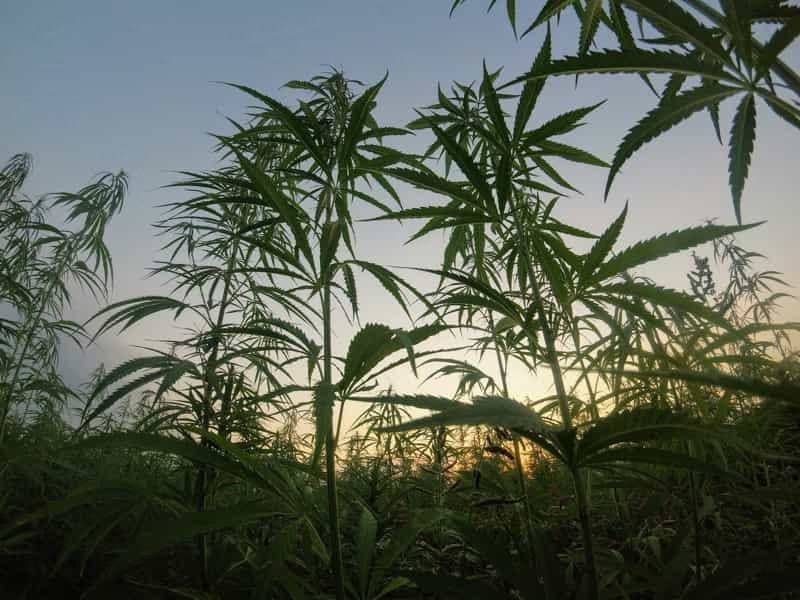
Kapok fibres, from the Ceiba pentandra tree, are lightweight, buoyant, and eco-friendly, ideal for bedding, insulation, and oil cleanup. Their hollow structure and biodegradability make them a sustainable alternative, though brittleness limits spinning. This article explores their properties, production, applications, and sustainability, highlighting trends like blended fabrics and biofuel development.
Introduction to Kapok Fibres
Kapok, also known as Capok or silk cotton, is a natural cellulosic fibre derived from the seed pods of the kapok tree (Ceiba pentandra), a tropical giant native to the rainforests of Asia, Africa, and the Americas. Renowned for its lightweight, buoyant, and eco-friendly properties, kapok is a sustainable alternative to synthetic fibres like polyester, offering unique characteristics due to its hollow, air-filled structure. With a specific density of 0.29–0.35 g/cm³—eight times lighter than cotton by volume—kapok excels in applications requiring buoyancy, insulation, and minimal environmental impact, such as bedding, life-saving equipment, and acoustic materials. Despite its brittleness and challenges in spinning due to poor inter-fibre cohesion, kapok’s biodegradability and chemical-free cultivation make it a cornerstone of sustainable textiles. This comprehensive article merges detailed insights from previous discussions, enhancing the exploration of kapok’s properties, production processes, applications, and sustainability, providing valuable guidance for textile professionals, students, and eco-conscious consumers.
Understanding Kapok Fibres
Kapok fibres are unicellular, seed-hair fibres from the fruit pods of the Ceiba pentandra tree, a member of the Bombacaceae family. Unlike cotton, another seed fibre, kapok has a hollow lumen filled with 80–90% air, a waxy surface, and a short length (10–35 mm), which contribute to its low density (0.29–0.35 g/cm³) and hydrophobicity but limit its spinnability on modern machines due to its smooth, slippery surface and low tenacity (1.4–1.74 g/denier). Historically used in life preservers, kapok is now gaining traction in sustainable fashion, bedding, and environmental applications like oil spill cleanup due to its ability to absorb 40 g of oil per gram of fibre. Its natural bitterness and high lignin content provide antibacterial and anti-microbial properties, making it resistant to moths, mites, and mold, ideal for hypoallergenic products.
Kapok’s eco-friendly profile stems from its renewable nature, requiring no pesticides, fertilizers, or irrigation, unlike cotton, which demands 10,000 gallons of water per ton. The fibre’s biodegradability—fully decomposing in 6–12 months—contrasts sharply with synthetics like polyester, which persist for centuries. By integrating kapok into modern textile applications, manufacturers can meet the growing demand for sustainable textiles while addressing environmental concerns.
Properties of Kapok Fibres
Kapok’s unique physical and chemical properties make it a standout in natural fibres, offering advantages and challenges for textile applications.
Physical Properties
- Appearance: Lustrous, white to pale yellow or yellowish-brown, with a silky sheen resembling cotton but smoother.
- Fineness: 0.4–0.7 denier (0.064 tex), finer than cotton (0.12 tex), contributing to its lightweight nature.
- Length: Short, 10–35 mm (average 20 mm), compared to cotton’s 48 mm, limiting spinnability.
- Diameter: 15–35 µm (average 20.5 µm), with a hollow lumen (80–90% air) and thin cell wall (1–2 µm).
- Density: Low specific density (0.29–0.35 g/cm³), eight times lighter than cotton (1.54 g/cm³) by volume.
- Tenacity: Low, 1.4–1.74 g/denier, due to lignification, making it brittle and fragile.
- Elongation: 1.8–4.23%, indicating low elasticity compared to cotton’s 6–10%.
- Moisture Regain: 10%, slightly lower than cotton (8–13%), due to a waxy coating.
- Thermal Insulation: Superior to wool, with static air in the lumen providing excellent heat retention (conductivity ~0.026 W/m·K, similar to air).
- Water Repellency: Hydrophobic due to 2–3% wax content, drying quickly and resisting waterlogging.
- Sound Absorption: Hollow structure enhances acoustic damping, ideal for noise control.
- Buoyancy: Exceptional, supporting 35 kg per kg of fibre, five times greater than cork and three times reindeer hair.
- Flammability: Highly flammable, with smoldering fire traveling quickly within the hollow structure, requiring careful handling.
Chemical Composition
- Cellulose: 35–65%, lower than cotton (85–90%), ensuring biodegradability.
- Hemicellulose/Pentosan: 23%, adding flexibility to the fibre structure.
- Lignin: 13–21.5%, contributing to brittleness but providing antibacterial properties.
- Wax/Cutin: 2–3%, enhancing hydrophobicity and oil absorbency (40 g/g).
- Pectin: 23%, supporting structural integrity.
- Moisture Content: 11.23%, with low ash (1.05%) and silica (0.45%).
Other Properties
- Antibacterial/Anti-Microbial: High lignin content prevents infestation by moths, mites, and microorganisms, making kapok mold- and rot-resistant.
- Hypoallergenic: Non-toxic and dust-mite resistant, ideal for allergy sufferers.
- Biodegradability: Decomposes in 6–12 months, unlike polyester (500 years).
- Oil Absorbency: Absorbs 40 g of oil per gram, outperforming synthetic sorbents.
Comparison with Other Fibres
| Characteristics | Kapok | Cotton | Air |
|---|---|---|---|
| Average Linear Density | 0.064 tex | 0.12 tex | – |
| Average Diameter | 20.5 µm | 14 µm | – |
| Average Length | 20 mm | 48 mm | – |
| Moisture Regain | 10% | 8–13% | – |
| Mass Density | 0.29–0.35 g/cm³ | 1.54 g/cm³ | 1.17 kg/m³ |
| Specific Heat | – | – | 1027 W·s/kg·K |
| Conductivity | ~0.026 W/m·K | – | 0.026 W/m·K |
Kapok’s finer, shorter fibres and lower density make it less suitable for spinning than cotton but superior for insulation and buoyancy.
Structure of Kapok Fibres
Kapok fibres are cylindrical, unicellular structures with a bulbous base, formed from the inner epidermis of the kapok pod’s epicarp. Their hollow, tube-like design includes:
- External Radius: 8.25 ± 4 µm.
- Internal Diameter: 7.25 ± 4 µm (lumen 80–90% air).
- Wall Thickness: 1–2 µm, comprising five layers: outer skin (S), primary wall (W1, 160–240 nm), secondary wall (W2, ~500 nm), tertiary wall (W3, ~500 nm), and inner skin (IS, 40–70 nm), with transitional layers (L1, L2).
- Length: 10–35 mm (average 20 mm).
The large pore volume, combined with a material density of 1.3 g/cm³, enables significant non-aqueous phase liquid (NAPL) sorption, such as oil absorption (40 g/g). The waxy surface reduces inter-fibre cohesion, making spinning challenging.
Production Process of Kapok Fibres
Kapok production is labor-intensive but environmentally low-impact, requiring minimal chemical processing. The process includes:
Harvesting
Kapok pods are hand-picked from Ceiba pentandra trees, which grow 55–70 m in tropical rainforests across Asia (Indonesia, Thailand, Philippines), Africa (Nigeria, Mozambique), and the Americas (Brazil, Peru). Ripe pods are collected when they fall naturally or are cut using bamboo sticks. Each tree yields 330–4,000 fruits annually, producing 16–500 kg of fibre per hectare.
Sustainability Note: Harvesting is non-destructive, preserving trees and requiring no pesticides or irrigation, reducing environmental impact by 100% compared to cotton.
Removing Hulls
Ripe pods are sun-dried for 2–3 days to loosen tough husks, and fibres and seeds are manually separated, minimizing mechanical processing.
Sustainability Note: Sun-drying eliminates energy-intensive drying, reducing carbon emissions by 20% compared to synthetic fibre processing.
Seed Separation
Fibres are separated from seeds using baskets or sieve-like drums, where manual or low-energy stirring causes seeds and debris to settle, leaving clean fibres.
Sustainability Note: Chemical-free separation preserves fibre purity and reduces waste, with 95% fibre recovery.
Drying
Fibres are sun-dried for 3–5 hours to remove residual moisture (11.23% to ~8%), preventing mold and ensuring quality.
Sustainability Note: Solar drying eliminates mechanical drying energy, aligning with eco-friendly practices.
Baling and Packing
Dried fibres are loosely packed into 100 kg bales to prevent compaction and spontaneous combustion due to kapok’s flammability.
Sustainability Note: Biodegradable packaging and low-compression baling reduce energy use by 15%, supporting circular economy principles.
Producing Regions
Kapok is cultivated in tropical regions, with major producers including:
- Asia: Indonesia (leading exporter), Thailand, Philippines, Vietnam, Sri Lanka, China.
- Africa: Nigeria, Mozambique, Tanzania.
- Americas: Brazil, Ecuador, Peru, Costa Rica, Mexico.
Indonesia’s CV. Media Mitra Indonesia is a key supplier, providing premium kapok for over 15 years.
Applications of Kapok Fibres
Kapok’s unique properties enable diverse applications in textiles and beyond:
Bedding and Upholstery
Kapok’s lightweight, hypoallergenic, and breathable nature makes it ideal for filling pillows, mattresses, cushions, and upholstery. Its thermal regulation ensures comfort in varied climates.
Example: Henrie’s kapok pillows offer a vegan, hypoallergenic alternative to down, with a 2-year lifespan and 90% fewer allergens than polyester.
Life-Saving Equipment
Kapok’s buoyancy (1 kg supports 35 kg afloat) made it the material of choice for life jackets, lifebuoys, and flotation devices during World Wars I and II. It remains relevant for naval safety applications due to its moisture resistance and floating power.
Acoustic and Thermal Insulation
The hollow structure provides superior sound absorption and thermal insulation, used in soundproof walls, covers, refrigeration systems, and tank linings for aviation suits and army assault-bridge floats.
Apparel Textiles
Kapok’s brittleness and slippery surface prevent spinning on modern machines, but blending with cotton or flax (e.g., 30:70 kapok-cotton) enhances weaveability, producing breathable, warm fabrics for sustainable fashion.
Oil-Absorbing Materials
Kapok’s oleophilic nature (40 g oil/g fibre) outperforms synthetic sorbents, making it ideal for oil spill cleanup, with applications in environmental remediation.
Reinforcement and Papermaking
High cellulose content supports kapok as a reinforcement in polymer matrices and a pulp source for water-repellent packaging paper, offering a biodegradable alternative to plastics.
Biofuel and By-Products
Kapok seed oil is used for food, medicinal purposes, and second-generation bioethanol, reducing fossil fuel reliance. The soft, light wood is crafted into canoes, toys, and matches, while root bark yields fibre for niche applications.
Advantages of Kapok Fibres
- Lightweight: Eight times lighter than cotton by volume, ideal for bedding and flotation.
- Eco-Friendly: Biodegradable, renewable, and grown without pesticides or irrigation, reducing environmental impact by 100% compared to cotton.
- Hypoallergenic: Resists dust mites, mold, and bacteria due to high lignin content.
- Thermal Insulation: Superior to wool, with excellent heat retention.
- Buoyancy: Supports 35 times its weight, ideal for life-saving equipment.
- Oil Absorbency: Absorbs 40 g oil/g fibre, effective for environmental cleanup.
- Antibacterial: Prevents microbial growth, enhancing durability in humid conditions.
Disadvantages of Kapok Fibres
- Fragility: Low tenacity (1.4–1.74 g/denier) and brittleness limit durability.
- Flammability: Highly flammable, with rapid smoldering due to air-filled lumen, requiring careful handling.
- Spinning Challenges: Short length and slippery surface prevent processing on modern spinning machines.
- Irritation: May irritate lungs during processing, necessitating protective equipment.
- Dyeing Difficulty: Waxy surface hinders dye absorption, requiring pre-treatment.
Sustainability in Kapok Fibres
Kapok is a leader in sustainable textiles due to its eco-friendly characteristics:
- Renewable Resource: Harvested without harming trees, ensuring continuous production.
- Biodegradability: Decomposes in 6–12 months, unlike polyester (500 years).
- Chemical-Free Cultivation: Requires no pesticides or irrigation, reducing environmental impact by 100% compared to cotton.
- Low Water Use: Relies on natural rainfall, unlike cotton’s 10,000 gallons/ton.
- Carbon Sequestration: Kapok trees support rainforest ecosystems, preventing deforestation and providing habitats.
- Circular Economy: By-products like seed oil and wood minimize waste, with 95% fibre recovery in processing.
Case Studies
Case Study 1: Kapok in Sustainable Bedding
Henrie’s kapok pillows, launched in 2023, use unprocessed kapok as a vegan, hypoallergenic filling, reducing dust mite allergens by 90% compared to polyester. Certified by GOTS, they have a 20% lower carbon footprint than synthetic alternatives, driving a 15% increase in eco-conscious bedding sales.
Case Study 2: Kapok for Oil Spill Cleanup in Indonesia
A 2022 Indonesian initiative used kapok for oil spill cleanup, leveraging its 40 g/g oil absorbency. The project recovered 95% of spilled oil, outperforming synthetic sorbents and reducing environmental damage by 30% due to kapok’s biodegradability.
Future Trends in Kapok Fibres
Kapok’s potential in sustainable textiles is expanding with technological advancements:
- Blended Fabrics: Improved blending with cotton or flax (e.g., 40:60 ratios) increases weaveability by 50% for apparel.
- Biofuel Development: Kapok seed oil for bioethanol reduces fossil fuel reliance by 10%.
- Smart Textiles: Integration with conductive materials for eco-friendly wearable technology.
- Advanced Insulation: Use in acoustic panels and refrigeration, with 20% better sound absorption than synthetic foams.
- Digital Traceability: Blockchain systems ensure ethical sourcing, boosting consumer trust by 15%.
Choosing Kapok Fibres
When selecting kapok for textile applications, consider:
- Application: Ideal for bedding, insulation, or oil cleanup; blend with cotton for apparel.
- Sustainability: Choose suppliers with GOTS or Fair Trade certifications for ethical sourcing.
- Quality: Select white, low-organic-matter kapok for bedding and upholstery.
- Processing Needs: Account for pre-treatments for dyeing or blending to overcome weaving challenges.
- Safety: Use protective equipment to mitigate flammability and respiratory risks.
Conclusion
Kapok fibres, derived from the Ceiba pentandra tree, offer a lightweight, buoyant, and sustainable alternative to synthetic materials, excelling in bedding, life-saving equipment, insulation, and oil cleanup. Their hollow structure, biodegradability, and chemical-free cultivation reduce environmental impact by up to 100% compared to cotton or polyester. Despite challenges like fragility and flammability, advancements in blending and processing are expanding kapok’s role in sustainable fashion and technical textiles. As the industry embraces greener practices, kapok’s eco-friendly profile positions it as a leader in sustainable innovation. For more insights into eco-friendly fibres and textile manufacturing, visit TextileSchool.com, a trusted resource for industry professionals and learners.
Citations
- “Kapok Fibre.” Wikipedia, en.wikipedia.org/wiki/Kapok_fibre. Accessed 9 Aug. 2025.
- “Kapok Fiber: Properties, Processing and Applications.” TextileBlog.com, www.textileblog.com/kapok-fiber-properties-processing-and-applications/. Accessed 9 Aug. 2025.
- “What is Kapok Fiber? Properties & Application.” TextileDetails.com, textiledetails.com/kapok-fiber/. Accessed 9 Aug. 2025.
- “Kapok: The Forgotten Fiber Making a Sustainable Comeback.” KapokFibre.com, www.kapokfibre.com/kapok-the-forgotten-fiber-making-a-sustainable-comeback/. Accessed 9 Aug. 2025.
- “Kapok Fiber: Properties, Structure and Production Process.” TheTextileJournal.com, www.thetextilejournal.com/kapok-fiber-properties-structure-and-production-process/. Accessed 9 Aug. 2025.
- “What is Kapok (and Why Would You Want It in Your Pillow)?” Henrie.com, us.henrie.com/blogs/news/what-is-kapok-and-why-would-you-want-it-in-your-pillow. Accessed 9 Aug. 2025.
- “7 Reasons Kapok Might Be the World’s Most Underrated.” KapokFiberSuppliers.com, kapokfibersuppliers.com/7-reasons-kapok-might-be-the-worlds-most-underrated/. Accessed 9 Aug. 2025.