

Textile fibres are classified first by where they come from. Natural fibres grow as fibres: plants give cellulose fibres such as cotton, flax and jute, animals give protein fibres such as wool and silk, and a group of minerals, asbestos, gives fibres now known to cause cancer. Manufactured fibres, also called man-made fibres, are spun in a factory from a polymer or a melt: from a natural polymer, as viscose, lyocell and acetate are made from wood cellulose; from a synthetic polymer, as polyester, nylon and acrylic are; or from an inorganic material such as glass, basalt or carbon. This page sets out that classification, then compares 34 fibres in one table of density, strength, stretch, moisture, heat and flammability, with a named source for every figure. Below the table, each fibre links to the site’s own article on it and to the calculators that use these numbers.
Last verified: 5 October 2026. Every figure in the table carries a key to the list of sources beneath it. A dash means no source this page trusts gave a value.
How textile fibres are classified
The tree below follows the generic names of the international standards: ISO 6938 for natural fibres and ISO 2076 for man-made fibres, whose seventh edition ISO published in November 2021. BISFA, the international bureau that standardises man-made fibre names, publishes the same generic names with a short code for each, such as CV for viscose, CLY for lyocell, PES for polyester and PAN for acrylic (BISFA terminology, 2017 edition).
- Natural fibres
- Plant (cellulose) fibres
- Seed and fruit fibres: cotton, kapok, coir
- Bast (stem) fibres: flax, hemp, jute, ramie, kenaf
- Leaf fibres: sisal, abaca, banana, piña (pineapple), raffia
- Animal (protein) fibres
- Wool, from sheep
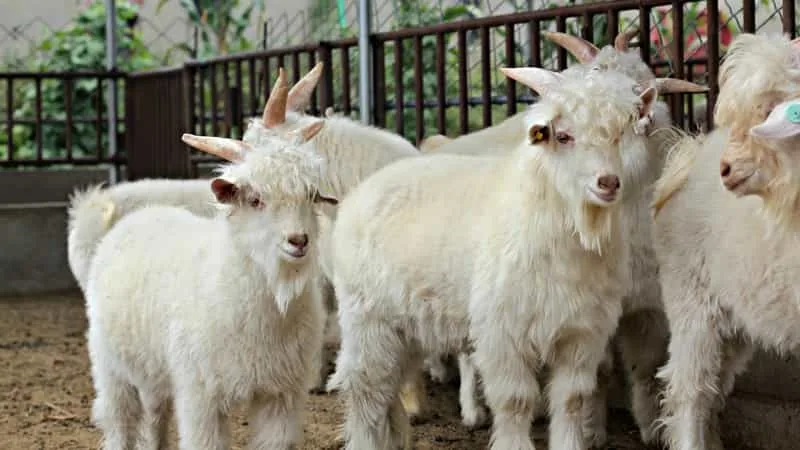
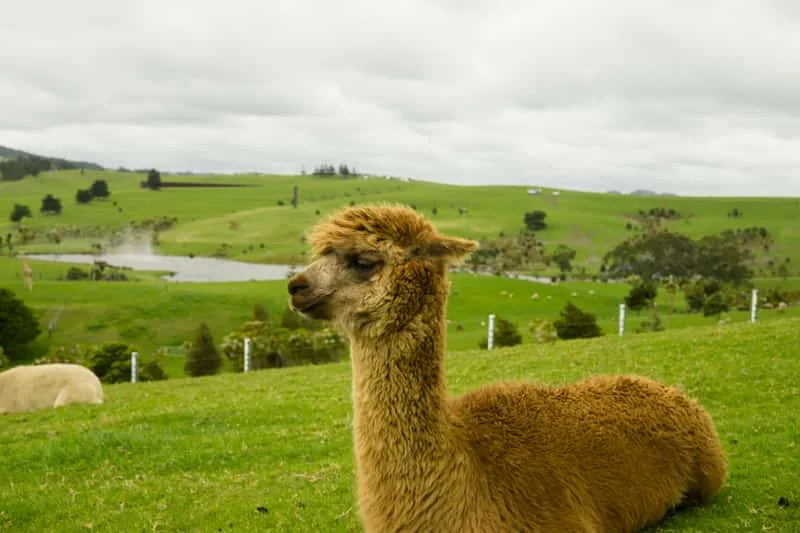
- Fine animal hair: mohair and cashmere from goats; alpaca, llama, vicuña, guanaco and camel from camelids; angora from the rabbit; yak; qiviut from the musk ox
- Silk, from silk moths
- Mineral fibres: asbestos, now known to cause cancer
- Plant (cellulose) fibres
- Manufactured (man-made) fibres
- From natural polymers
- Regenerated cellulose: viscose (rayon), modal, lyocell, cupro
- Cellulose esters: acetate, triacetate
- Others: regenerated protein fibres such as casein and soy, and alginate
- From synthetic polymers
- Polyesters: polyester (PET) and polylactide (PLA)
- Polyamides: nylon 6 and nylon 6,6; the aramids, meta-aramid and para-aramid
- Acrylic and modacrylic
- Polyolefins: polypropylene and polyethylene, including UHMW polyethylene
- Elastane (spandex)
- Vinyl and fluorinated fibres: chlorofibre (PVC), vinylal (PVA), fluorofibre (PTFE)
- Heat-resistant fibres such as PBI
- From inorganic materials: glass, basalt, carbon, ceramic and metal fibres
- From natural polymers
Labelling law uses the same families with local names. The EU’s Regulation 1007/2011 lists the names that may appear on a label in its Annex I, and defines each fibre by chemistry or origin. The United States’ 16 CFR 303.7 keeps some American names: rayon for regenerated cellulose, spandex for elastane and olefin for polypropylene and polyethylene.
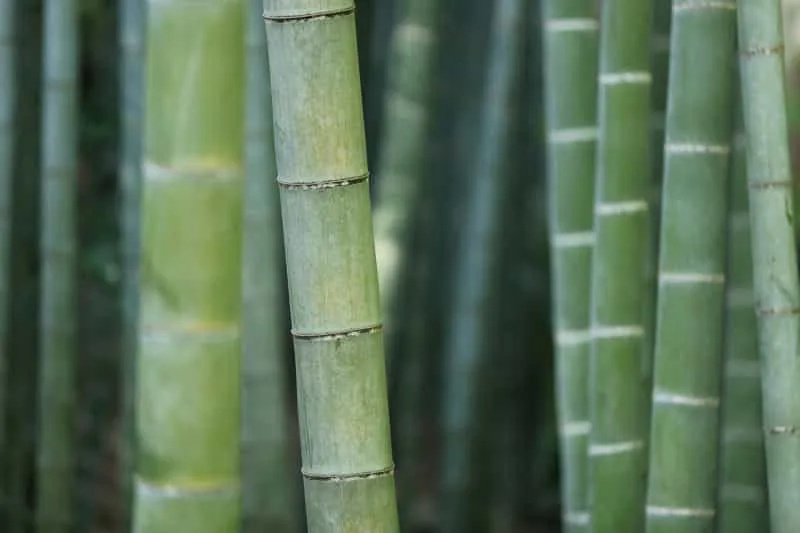
Two points catch readers out. First, natural fibres are staple fibres, of finite length, except silk, which is reeled from the cocoon as a continuous filament; manufactured fibres are made as continuous filaments and are used either as filament or cut into staple. Second, most textiles sold as bamboo are viscose made from bamboo pulp. The US Federal Trade Commission’s guidance is that a product may be called bamboo only if it is made directly of bamboo fibre; otherwise it is rayon, or rayon made from bamboo, because “there’s no trace of the original plant in the finished rayon product” (FTC, How to Avoid Bamboozling Your Customers, 2009).
Properties of 34 textile fibres
The table compares density; tenacity, which is breaking force per unit of linear density; elongation at break; the commercial moisture regain used in trade; the moisture allowance EU law uses to calculate fibre content; how the fibre behaves when heated; and the limiting oxygen index (LOI), a measure of flammability. Mechanical figures are for dry fibre. Textile tests are normally made in the standard atmosphere of ISO 139, 20 °C and 65% relative humidity, though not every source states its conditions. Natural fibres vary with variety, growing conditions and extraction, and results vary with the test method, so most cells are ranges, and where sources differ the range spans them. The notes below the table explain each column and what its figures can be used for.
| Fibre | Class | Density, g/cm³ | Tenacity, cN/tex, dry | Elongation at break, % | Commercial moisture regain, % | EU agreed allowance, % | Effect of heat, °C | LOI, % |
|---|---|---|---|---|---|---|---|---|
| Cotton | Plant, seed | 1.50–1.56 [LB, ZK] | 24–44 [LB, CI] | 4–10 [BK, SS] | 7.0 raw and yarn; 8.5 mercerised yarn [IS] | 8.5; mercerised 10.5 [EU] | Does not melt; decomposes slowly above 149, rapidly above 246 [CI] | 18–18.5 [BJ, KK] |
| Kapok | Plant, fruit | 0.37–0.38 with the hollow centre; cell wall 1.47 [SS, ZK] | — | 1.2 [SS] | — | 10.9 [EU] | — | — |
| Flax (linen) | Plant, bast | 1.50–1.54 [ZK, BK] | 40–80 [ZK, SS] | 1.2–3.2 [PK, SS] | 12.0 raw flax; 8.75 linen [IS] | 12 [EU] | Does not melt; main decomposition begins at 296–300 (TGA, nitrogen) [RZ] | — |
| Hemp | Plant, bast | 1.48–1.50 [ZK, BK] | 47–80 [ZK, SS] | 1.5–1.6 [SS, PK] | 12.0 [IS] | 12 [EU] | Does not melt; main decomposition begins at 290–300 (TGA, nitrogen) [RZ] | — |
| Jute | Plant, bast | 1.44–1.50 [ZK, BK] | 24–45 [ZK, SS] | 1–2 [SS] | 13.75 [IS] | 17 [EU] | — | — |
| Ramie | Plant, bast | 1.50–1.55 [BK, ZK] | 45–88 [SS, ZK] | 2–7 [PK, SS] | — | 8.5 (bleached) [EU] | — | — |
| Sisal | Plant, leaf | 1.3–1.5 [PK] | 36–61 [PK, ZK] | 2.0–2.5 [PK] | — | 14 [EU] | — | — |
| Abaca | Plant, leaf | 1.5 [ZK] | — | — | — | 14 [EU] | — | — |
| Coir | Plant, fruit | 1.2 [PK] | 11–18 [PK] | 15–30 [PK] | — | 13 [EU] | — | — |
| Wool | Animal | 1.30–1.31 [ZK, BK] | 8–18 [ZK, BK] | 25–40 [BK] | 13.6 [IS] | 17 carded; 18.25 combed [EU] | Does not melt; chars at about 300; ignites at 570–600 [ZK, IW] | 23.6–25 [KK, BJ] |
| Silk (mulberry) | Animal | 1.34–1.37 [BK, ZK] | 27–40 [ZK, BK] | — | 11.0 [IS] | 11 [EU] | Does not melt; stable to about 150 [ZK] | 23.6 (fabric) [KK] |
| Viscose (rayon) | Regenerated cellulose | 1.52–1.54 [LB] | 24–26 [LB] | 17–25 [ZH] | 11.0 (as rayon) [IS] | 13 [EU] | Does not melt; pyrolysis at about 350 [BJ, KK] | 18.9 [BJ, KK] |
| Modal | Regenerated cellulose | 1.52–1.54 [LB] | 34–36 [LB] | — | 11.0 (as rayon) [IS] | 13 [EU] | — | — |
| Lyocell | Regenerated cellulose | 1.50 [LB] | 40–42 [LB, ZH] | 11–16 [ZH] | 11.0 (as rayon) [IS] | 13 [EU] | Does not melt; stable to about 250, rapid mass loss above 300 (TGA, nitrogen) [RJ] | — |
| Acetate | Cellulose ester | — | — | — | 6.5 [IS] | 9 [EU] | Melts at about 250 [CF] | — |
| Triacetate | Cellulose ester | — | — | — | 3.5 [IS] | 7 [EU] | Melts at 290–300 [BJ, CF] | 18.4 [BJ] |
| Polyester (PET) | Synthetic | 1.36–1.41 [LB, MF] | 28–80, by grade [LB, IR, MF] | 18–27 (apparel staple) [IR] | 0.4 [IS] | 1.5 [EU] | Melts at 250–260 [LB, BJ] | 20–21 [BJ, KK] |
| Nylon 6 | Synthetic | — | — | — | 4.5 [IS] | 6.25 staple; 5.75 filament [EU] | Melts at about 215 [BJ, KK] | 20–21.5 [BJ, KK] |
| Nylon 6,6 | Synthetic | 1.14 [MF] | 20–82, by grade [MF] | — | 4.5 [IS] | 6.25 staple; 5.75 filament [EU] | Melts at 255–265 [MF, BJ] | 20–21.5 [BJ] |
| Acrylic | Synthetic | — | — | — | 1.5 [IS] | 2 [EU] | Glass transition about 100; pyrolysis about 290 [BJ] | 18.2 [BJ, KK] |
| Modacrylic | Synthetic | 1.20–1.35 [MF] | 23–34 [KA] | 21–29 [KA] | 0.4–3.0, by class [IS] | 2 [EU] | Softens at 120–125; decomposes from 247–277 [MF, RJ] | 26–32 [KA, BJ] |
| Polypropylene | Synthetic | 0.90–0.92 [LB, MF] | 25–60 [LB] | — | 0 (as olefin) [IS] | 2 [EU] | Melts at 160–175 [LB, MF] | 18.6 [BJ, KK] |
| UHMW polyethylene | Synthetic | 0.97–0.98 [SP, MF] | 282–327 (Spectra S1000) [SP] | 3.0–3.5 [SP] | 0 (as olefin) [IS] | 1.5 (as polyethylene) [EU] | Melts at about 144–152 [MF, KV] | — |
| Elastane (spandex) | Synthetic | — | — | 300–700 [AS] | 1.3 [IS] | 1.5 [EU] | — | — |
| PLA (polylactide) | Synthetic, bio-based | 1.24–1.25 (polymer) [NW, LB] | 26–53 [NW, LB] | 10–70 [NW] | — | 1.5 [EU] | Melts at 165–180 [NW] | — |
| Chlorofibre (PVC) | Synthetic | — | — | — | 0 (as vinyon) [IS] | 2 [EU] | Softens and shrinks at about 150 [BJ] | 37–39 [BJ] |
| Vinylal (PVA) | Synthetic | — | 86–100 (industrial filament) [KU] | 6–7.5 [KU] | 4.5 (as vinal) [IS] | 5 [EU] | — | — |
| Fluorofibre (PTFE) | Synthetic | 2.3 [TF] | 12–18 [TF] | 15–100 [TF] | 0 (as fluorocarbon) [IS] | 0 [EU] | Melts at 327 [TF, BJ] | 65 (brown) to above 95 (white) [TF] |
| Meta-aramid (Nomex) | Synthetic | 1.37–1.38 [NX] | 23–44 [NX] | 19–31 [NX] | 4.5 (safety apparel) [IS, NX] | 8 (as aramid) [EU] | Does not melt; carbonises above about 427 [NX] | About 28 [NX] |
| Para-aramid (Kevlar 29) | Synthetic | 1.44 [KV] | 203 [KV] | 3.6 [KV] | 3.5–7.0, by end use [IS] | 8 (as aramid) [EU] | Does not melt; decomposes at 427–482 in air [KV] | 29 [KV] |
| PBI | Synthetic | — | — | — | — | — | Does not melt; decomposition reported from 450 to 704, by method [RJ, PB] | 40–42 [BJ] |
| Glass (E-glass) | Inorganic | 2.6 [NB] | 123 (unsized virgin fibre) [NB] | 4.8 [NB] | 0 [IS] | 2; 3 if 5 µm or finer [EU] | Softens at 844–920 [NB, KM] | — |
| Carbon (Toray T300) | Inorganic | 1.76 [TC] | 201 [TC] | 1.5 [TC] | — | — | — | — |
| Basalt | Inorganic | About 2.7 [DB] | 111–148 [DB] | — | — | — | Softens at 1,060; melts at 1,250 [KM] | — |
Sources for the table
The key in square brackets after each figure names its source below. Every source was read on 5 October 2026. Producer figures describe the grade named, not every fibre of that type.
- AS: Asahi Kasei, What is spandex / elastane (ROICA).
- BJ: P. Bajaj, Fire-retardant materials, Bulletin of Materials Science 15(1), 67 to 76, 1992, Table 1, thermal transitions and LOI of fibres.
- BK: I. P. Beckman, C. Lozano, E. Freeman and G. Riveros, Fiber Selection for Reinforced Additive Manufacturing, Polymers 13(14), 2231, 2021, Table 4 and text.
- CF: CIRFS, the European Man-made Fibres Association, Acetate.
- CI: Cotton Incorporated, Cotton Fiber Tech Guide, Cotton morphology and chemistry, Table 6 and text; strengths converted from g/tex.
- DB: Deutsche Basalt Faser, Basalt roving; tenacity converted from 3,000 to 4,000 MPa.
- EU: Regulation (EU) No 1007/2011 on textile fibre names, consolidated text of 15 February 2018, Annex IX, agreed allowances.
- IR: Indo Rama Synthetics, polyester staple fibre grades, 1.0 to 1.7 denier.
- IS: Bureau of Indian Standards, IS 13157:1991, Textile fibres, commercial moisture regains, Table 1, with Amendment No. 1. The standard says it is mainly based on ASTM D1909-1985.
- IW: IWTO, Flame resistance.
- KA: Kaneka, Protex modacrylic product list; tenacity converted from 2.3 to 3.4 cN/dtex.
- KK: P. Kakar, A. Singh and J. Sheikh, Flame retardant finishing of textiles, a comprehensive review, Indian Journal of Fibre and Textile Research 48, 475 to 494, 2023, Table 1 and text.
- KM: Kamenny Vek, BasFiberPro heat resistance, andesite-basalt against E-glass.
- KU: Kuraray, KURALON filament; tenacity from breaking force and decitex.
- KV: DuPont, Kevlar aramid fiber technical guide, 2017, Tables II-1 and II-2.
- LB: L. Shen and M. K. Patel, Life Cycle Assessment of man-made cellulose fibres, Lenzinger Berichte 88, 1 to 59, 2010, Table 3, staple fibres.
- MF: MiniFIBERS, Comparison of fiber properties, typical values for short-cut fibres; tenacity converted from grams per denier.
- NB: Nittobo, Composition and characteristics of glass fiber; tenacity converted from the 3.2 GPa strength of unsized virgin fibre.
- NW: NatureWorks, Ingeo 6100D technical data sheet, fibre melt spinning; specific gravity is for the polymer.
- NX: DuPont, Technical guide for Nomex fiber, 2019, Table II-1 and text; the regain of 5 to 5.5% measured on Nomex IIIA fabric is in the text.
- PB: PBI Performance Products, About PBI; 1,300 °F converted to 704 °C.
- PK: K. L. Pickering, M. G. Aruan Efendy and T. M. Le, A review of recent developments in natural fibre composites and their mechanical performance, Composites Part A 83, 98 to 112, 2016, Table 2; tenacity from its specific tensile strength.
- RJ: T. Rijavec, M. Leskovšek, N. Sukič, B. Rajar and A. Pavko Čuden, Quality of fine yarns from modacrylic/polyacrylate/lyocell blends, Materials 16(12), 4386, 2023, Table 2 and thermogravimetric results.
- RZ: W. Różańska and colleagues, The quantity and quality of flax and hemp fibers obtained using the osmotic, water- and dew-retting processes, Materials 16, 7436, 2023, Tables 5, 7 and 9.
- SP: Solstice Advanced Materials, Spectra S1000 fiber for industrial applications; tenacity converted from 32 to 37 g/den.
- SS: M. Sfiligoj Smole, S. Hribernik, K. Stana Kleinschek and T. Kreže, Plant fibres for textile and technical applications, in Advances in Agrophysical Research, IntechOpen, 2013.
- TC: Toray Composite Materials America, TORAYCA T300 data sheet, revised April 2025; tenacity converted from 3,530 MPa.
- TF: Toray Fluorofibers (America), Toray PTFE fibers; tenacity converted from 1.4 to 2.0 g/den.
- ZH: S. Zhang and colleagues, Regenerated cellulose by the lyocell process, a brief review, BioResources 13(2), 4577 to 4592, 2018, Table 2.
- ZK: M. Zimniewska and A. Kicińska-Jakubowska, Institute of Natural Fibres and Medicinal Plants, vegetable fibres sheet and animal fibres sheet, Discover Natural Fibres Initiative.
Reading the table
Density, tenacity and elongation
Density decides how much fabric a kilogram of fibre makes, and which fibres float: polypropylene and UHMW polyethylene are lighter than water, glass is more than twice as dense. For a hollow fibre the figure depends on whether the air inside counts; kapok is 0.37 to 0.38 g/cm³ with its hollow centre and 1.47 for the cell wall alone [SS].
Tenacity is breaking force divided by linear density, which lets fibres of different fineness be compared. The table uses centinewtons per tex; many producers still quote grams per denier, and 1 g/den equals 8.83 cN/tex. To compare with an engineering strength in megapascals, multiply cN/tex by the density and by 10: Kevlar 29 at 203 cN/tex and 1.44 g/cm³ comes to 2,923 MPa, against the 2,920 MPa DuPont publishes [KV]. Open the textile unit converter with those figures to see the same result in grams per denier and as a breaking length. The yarn count converter moves between denier, tex, decitex and the cotton, worsted and metric counts, and the micronaire converter turns a cotton micronaire reading into denier and tex. Single-fibre breaking tests follow ISO 5079 or ASTM D3822, and fibre fineness ISO 1973.
Treat the natural fibre figures with care. Much published data comes from the composites literature, which breaks single fibres and reports megapascals; textile tests break bundles and give lower numbers. Flax shows the spread: 40 to 80 cN/tex in the natural fibre sheets [ZK], about 55 in a textile review [SS], and 14 to 24 for laboratory-retted bundles broken at a 3 mm gauge [RZ]. Water matters too. Cotton is stronger wet than dry, while regenerated cellulose weakens: Lenzing’s staple figures put viscose at 10 to 13 cN/tex wet against 24 to 26 dry, modal at 19 to 21 against 34 to 36, and lyocell at 34 to 36 against 40 to 42 [LB].
Moisture regain: the commercial figure and the EU allowance
Moisture regain is the water a fibre holds, as a percentage of its oven-dry mass. Because the real figure moves with the weather, trade uses agreed values. The regain column gives the commercial moisture regains of the Indian Standard IS 13157:1991, which says it is mainly based on ASTM D1909-1985, the American table of commercial regains. The current ASTM edition is ASTM D1909-13, reapproved in 2026, whose own figures this page has not read. Both standards present their values as agreed rather than measured; IS 13157 calls a commercial regain “an arbitrary value formally adopted”. Two details matter in practice. The 1991 table gave raw cotton 8.5%, and its Amendment No. 1 replaced that with 7.0%, so check which figure a contract names. And the aramid and modacrylic figures depend on the end use or the class of fibre.
The EU column is a different quantity. Annex IX of Regulation 1007/2011 sets an “agreed allowance” for each fibre, which is added to the fibre’s anhydrous mass when the fibre content on a label is calculated (Article 19(3)). BISFA publishes the same figures as commercial allowances for man-made fibres and explains that they include “the moisture content and the content of substances which can be removed during analysis, e.g. spin finish”. That is why the EU figure is usually higher: polyester 0.4% against 1.5%, viscose 11.0% against 13%. Measured regain can differ from both. Flax and hemp from three retting methods held 8.8 to 9.4% and 9.8 to 10.9% at 65% relative humidity [RZ], and Nomex IIIA fabric holds 5 to 5.5% [NX].
Worked example: a blend has its own regain. Take 5,000 kg of 65/35 polyester and viscose yarn that a laboratory finds holding 6.2% moisture on its dry mass, an assumed figure. With the commercial regains in the table, polyester 0.4% and rayon 11.0%, the blend’s regain is 4.11%, so the lot’s oven-dry mass of 4,708.10 kg bills at 4,901.60 kg, 98.40 kg less than it weighed. Open the blend invoice weight calculator with these figures. Change the two regains to BISFA’s allowances, 1.5% for polyester and 13% for viscose, and the blend figure becomes 5.53% and the same lot bills at 4,968.22 kg. For a single fibre, the moisture regain calculator gives regain, moisture content and invoice weight; the commercial mass of a consignment is determined under ISO 6741-1, and the conditioning time calculator estimates how long a sample needs to settle in the standard atmosphere.
Heat
Most synthetic fibres are thermoplastic: polyester, nylon, polypropylene and acetate soften and then melt. That is why a hot iron glazes polyester, and why melting point governs heat-setting and fusing. Cotton, the bast fibres, viscose, wool, silk and the aramids do not melt; they decompose, char or burn, and the temperature at which that begins depends on time, atmosphere and heating rate, so the table names the method where the source does. Cotton Incorporated, for example, says long exposure above 149 °C decomposes cotton gradually and temperatures above 246 °C cause rapid deterioration [CI]. Melting, shrinking from the flame and the smell of burning are also how fibres are told apart in the burn test.
Limiting oxygen index (LOI)
The LOI is the lowest concentration of oxygen, in a mixture with nitrogen, that keeps a sample burning; the test methods are ISO 4589-2 and ASTM D2863. Air is about 21% oxygen. In the review by Kakar and colleagues, a textile with an LOI below 21 catches fire readily and burns in air, one between 21 and 27 can catch fire but burns slowly, and one above 27 is generally considered flame retardant [KK]. Published values for the same fibre vary with the sample tested, which is why several cells are ranges. The flame retardant LOI predictor estimates how much a flame-retardant finish raises a fabric’s LOI.
Using the table to compare two fibres
The material substitution comparator scores a proposed fibre against the one it would replace on tenacity, regain, density and cost. Take cotton and polyester at the middle of their staple ranges in the Lenzinger Berichte table, 30 and 41.5 cN/tex [LB], with the commercial regains of 7.0% and 0.4% [IS], densities of 1.52 and 1.38 g/cm³, and equal costs so that price does not move the score. Open the comparator with these figures. At its default weights it scores the swap at 91.37%, which reads as a pass, yet the regain ratio is 0.06: polyester’s commercial regain is six hundredths of cotton’s, a difference that changes how a garment feels and how readily it builds static. The fabric would also be 9.21% lighter for the same volume of fibre. Read the separate ratios, not only the total.
The fibres, one by one
Each entry links to the site’s main article on that fibre.
Plant fibres
- Cotton: the seed hair of the cotton plant, Gossypium. Cotton is classed by staple length, length uniformity, strength, micronaire, colour and trash content, and it is stronger wet than dry.
- Kapok: fibre from inside the fruit of the kapok tree, Ceiba pentandra. Its fibres are 70 to 80% air [SS], which makes them light and buoyant but smooth and hard to spin, so kapok is used mainly as filling.
- Coir: fibre from the husk of the coconut. Brown coir, from ripe nuts, is coarse, strong and resists abrasion and goes into brushes and mats; white coir, from husks taken before the nut ripens, is softer and is spun into yarn for matting and rope.
- Flax (linen): the bast fibre of Linum usitatissimum, freed from the stem by retting and spun into linen. It is among the strongest plant fibres and stretches very little.
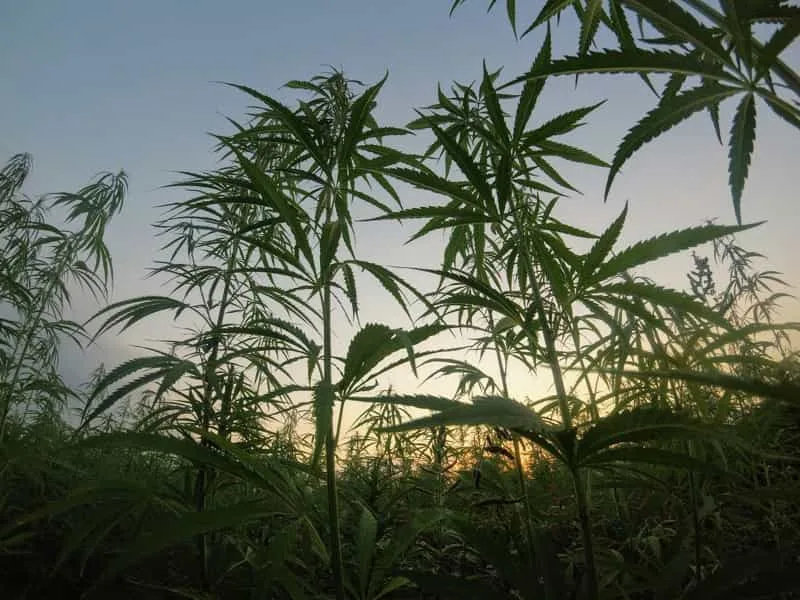
- Hemp: bast fibre from the stem of Cannabis sativa, coarser than flax and in a textile review about 20% stronger [SS].
- Jute: a coarse, lustrous bast fibre from Corchorus capsularis and C. olitorius, used for sacking, hessian and carpet backing. Its commercial regain, 13.75%, is the highest of the plant fibres in the table.
- Ramie: bast fibre of Boehmeria nivea, white and lustrous once degummed. In a textile review it is the strongest of the bast fibres, and like most natural cellulose fibres it gains strength when wet [SS].
- Kenaf: bast fibre of Hibiscus cannabinus. EU labelling law treats it in the same way as jute.
- Sisal: leaf fibre of Agave sisalana, used for twine, rope and matting.
- Abaca and raffia: abaca, also called Manila hemp, comes from the sheathing leaves of Musa textilis, a relative of the banana; raffia is stripped from the leaves of raffia palms and used for weaving and ties.
- Banana: fibre stripped from the false stem of the banana plant once the fruit has been harvested.
- Piña: fine fibre from pineapple leaves, woven into sheer piña cloth.


Animal fibres
- Wool: the fleece of the domestic sheep, a protein fibre with natural crimp and overlapping surface scales, which are why wool felts when it is washed hot and rubbed.
- Mohair: the lustrous hair of the Angora goat.
- Cashmere and pashmina: the fine undercoat of the cashmere goat, separated from the coarse outer hair by dehairing.
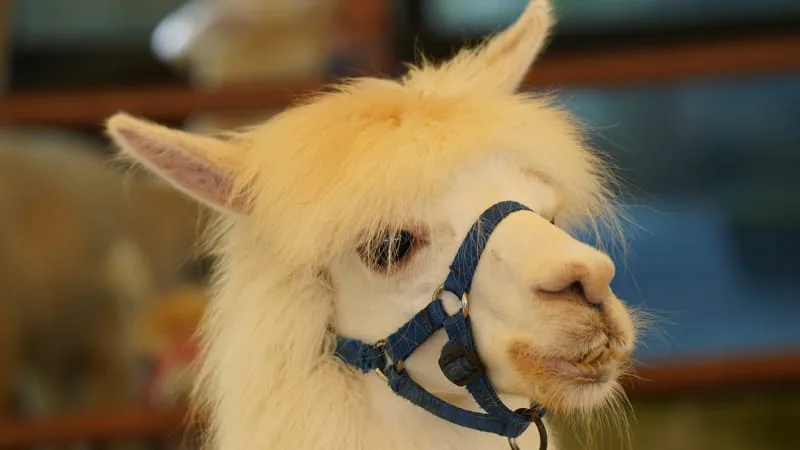
- Alpaca: the fleece of the alpaca, a South American camelid, from its two breeds, the Huacaya and the Suri.
- Llama, guanaco and vicuña: the llama is a domesticated camelid with a two-layered coat; the guanaco and the vicuña are wild camelids, and vicuña is among the finest animal fibres.
- Camel hair: the soft undercoat of the camel, usually left in its natural colour.
- Angora: hair of the Angora rabbit. The Angora goat gives mohair, not angora.
- Yak, qiviut and bison: fine down from the yak, the musk ox and the American bison. Dog hair, sometimes called chiengora, is spun by hand from long-coated breeds.
- Silk: a protein filament from the cocoons of silk moths, chiefly the mulberry silkworm, Bombyx mori. EU law defines silk as fibre obtained exclusively from silk-secreting insects.


Mineral fibres
Asbestos is a group of naturally fibrous silicate minerals, chrysotile, amosite and crocidolite among them, that were once woven into heat-resistant cloth. The World Health Organization states that “all forms of asbestos, including chrysotile, are carcinogenic to humans” and that “the most efficient way to eliminate asbestos-related diseases is to stop the use of all types of asbestos” (WHO fact sheet). It is listed here for completeness, not as a fibre to work with.

Manufactured fibres from natural polymers
- Viscose (rayon): cellulose from dissolving wood pulp, put into solution by the viscose process and spun into a bath that regenerates it as fibre. In the United States it is labelled rayon.
- Modal: regenerated cellulose from a modified viscose process, defined in EU law by a high breaking force and a high wet modulus. Lenzing makes Lenzing Modal from beech pulp [LB].
- Lyocell: cellulose dissolved directly in an organic solvent and spun without forming a chemical derivative; Tencel is Lenzing’s brand. Of the regenerated cellulose fibres in the table it is the strongest, wet or dry.
- Cupro, acetate and triacetate: cupro is cellulose regenerated by the cuprammonium process. Acetate and triacetate are cellulose esters, not regenerated cellulose; EU law calls a fibre acetate when at least 74% but fewer than 92% of its hydroxyl groups are acetylated, and triacetate from 92%. Both melt.
- Regenerated protein fibres: fibres spun from casein, soy and other natural proteins.
- Bamboo: usually viscose or lyocell made from bamboo pulp; see the note above.


Manufactured fibres from synthetic polymers
- Polyester: in EU law, at least 85% by mass of an ester of a diol and terephthalic acid; in practice almost always PET. The polyester article covers it in depth.
- Nylon: the polyamides 6 and 6,6, tough and abrasion-resistant. They differ most in melting point, about 215 °C against 255 to 265 °C.
- Aramids: aromatic polyamides that do not melt. Meta-aramid, such as Nomex, is used for heat and flame protection; para-aramid, such as Kevlar, for strength.
- Acrylic and modacrylic: acrylic is at least 85% acrylonitrile by mass; modacrylic has more than 50% and less than 85%, and is inherently flame resistant [MF].
- Polypropylene and polyethylene: the polyolefins, lighter than water. UHMW polyethylene, sold as Dyneema and Spectra, has the highest tenacity in the table.
- Elastane (spandex): at least 85% segmented polyurethane, and in EU law it must recover rapidly after being stretched to three times its length.
- PLA: polylactide. EU law defines it as at least 85% lactic acid ester units derived from naturally occurring sugars, with a melting point of at least 135 °C.
- Chlorofibre and vinylal: chlorofibres, such as PVC, are more than 50% chlorinated vinyl units and resist burning but shrink near 150 °C; vinylal is poly(vinyl alcohol) fibre.
- PTFE: fluorofibre, which melts at 327 °C; bleached PTFE fibre has an LOI above 95 [TF].
- PBI: polybenzimidazole, a heat-resistant fibre that does not melt; its producer puts the start of decomposition at 1,300 °F, 704 °C [PB].
Manufactured fibres from inorganic materials
- Glass and basalt: fibres drawn from molten glass or melted basalt rock. E-glass is the general-purpose glass; basalt softens at a higher temperature than E-glass [KM].
- Carbon: at least 90% carbon by mass, made by carbonising an organic precursor fibre, in BISFA’s definition.
Other sources and corrections
Besides the sources keyed to the table, this page relies on: ISO, ISO 2076:2021 and ISO 6938:2012 catalogue entries; BISFA, Terminology of man-made fibres, 2017 edition, for fibre codes, commercial allowances and the definition of carbon fibre; Regulation (EU) No 1007/2011, Annex I, for fibre definitions; the US Federal Trade Commission, How to Avoid Bamboozling Your Customers, 2009; and the World Health Organization, asbestos fact sheet. All were read on 5 October 2026.
Change log. 5 October 2026: rewritten in full around one sourced table. Corrected from the previous version: natural fibres are mostly staple, and silk is the only one used as a continuous filament; the llama is a camelid; the guanaco is a wild camelid, not a variety of camel; angora comes from the Angora rabbit, and the Angora goat gives mohair; silk for textiles comes from silk moths, chiefly Bombyx mori; most bamboo textiles are viscose; rayon is regenerated cellulose, not a modified cellulose like acetate; and the claims that cotton was used in Egypt in prehistory, that abaca is the strongest natural fibre, that modal absorbs half as much water again as cotton and that lyocell is as strong as polyester have been removed, because no source this page trusts supports them. Removed as out of place: lists of sheep breeds, yak varieties and angora rabbit breeds, which belong on the wool and hair fibre pages, and sugarcane bagasse.
Found an error, or a better source for a blank cell? Please tell us through the contact page, naming the fibre, the column and the source.


Wow Thanks! This is super clear.
Wow, superb weblog structure! How lengthy have you ever been blogging for? you made blogging glance easy. The overall glance of your site is wonderful, let alone the content!